

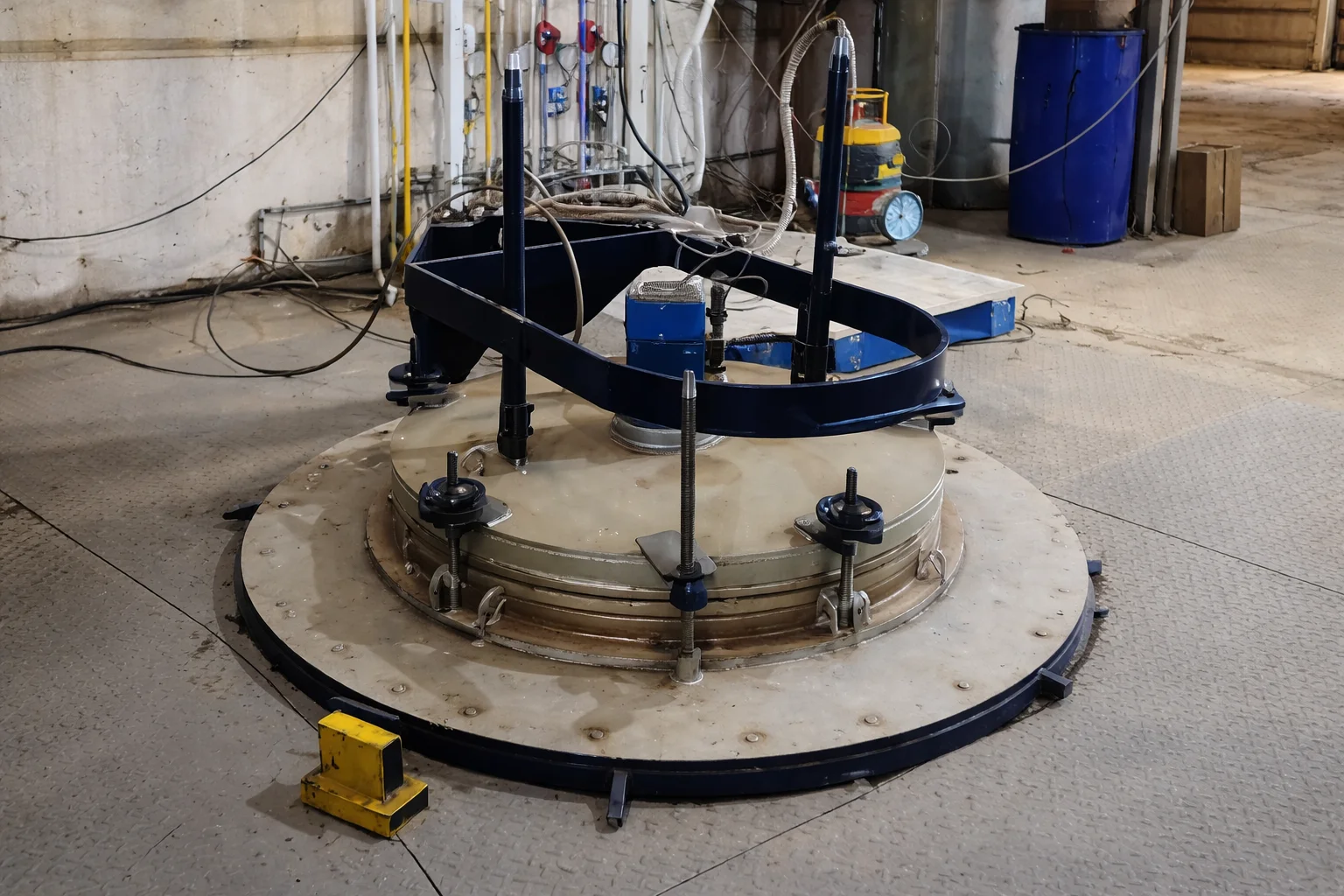
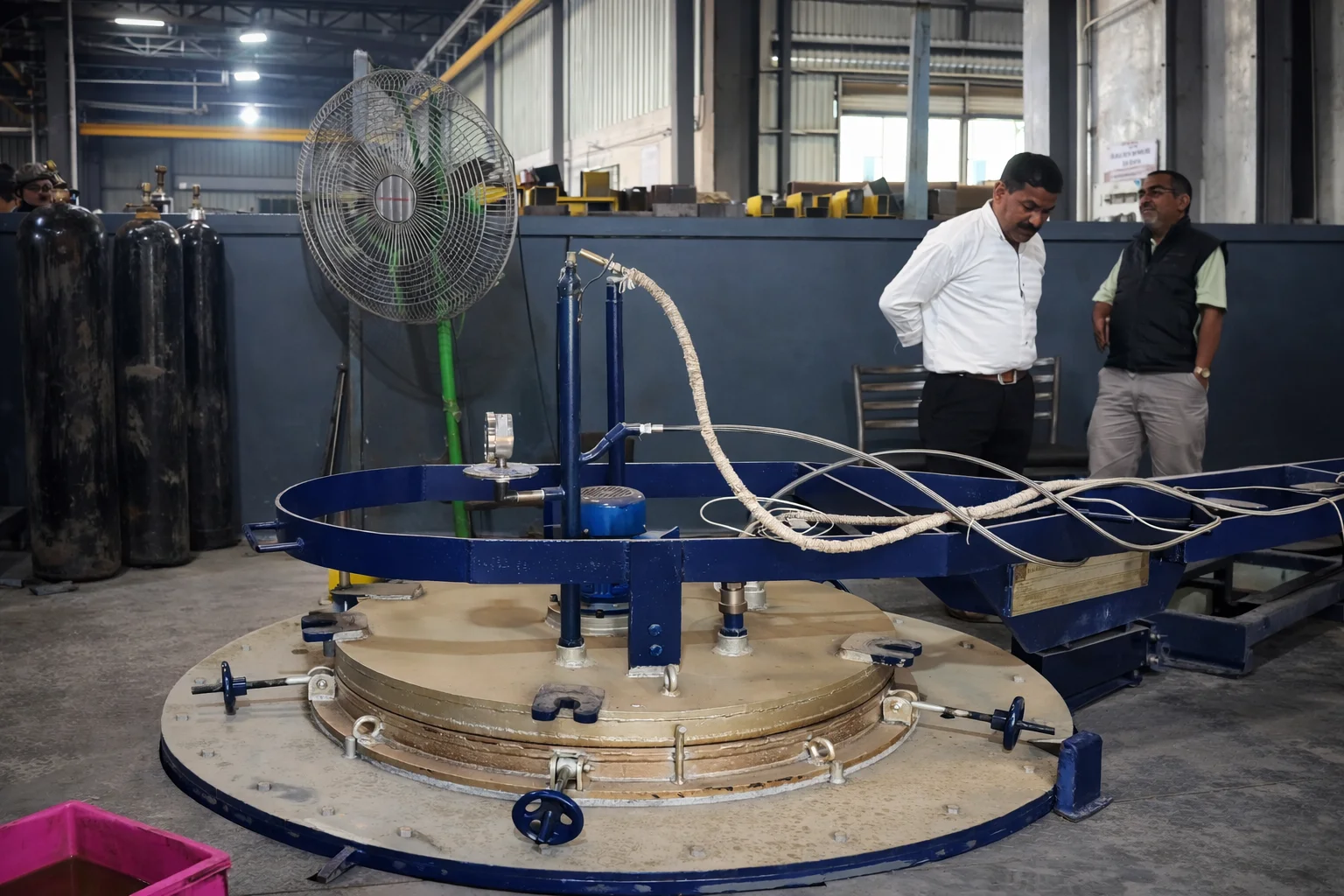
High-Precision Gas Nitriding Furnace for Industrial Heat Treatment
The advanced gas nitriding furnace manufacturer Pune is engineered for superior surface hardness, low distortion, and consistent metallurgical performance.
Trusted Gas Nitriding Furnace Manufacturer in Pune
These problems usually don’t come from the process itself—they come from poor furnace control.
At Raj Enterprises, we manufacture industrial nitriding furnaces in Pune that are designed to deliver stable, repeatable results under real production conditions.
As a reliable nitriding furnace supplier in Pune, our systems are built for:
- Precise nitrogen diffusion
- Uniform temperature control
- Minimal distortion of components
- Long-term operational stability
What is a Gas Nitriding Furnace?
A gas nitriding furnace manufacturer in Pune is used to introduce nitrogen into the surface of steel components, improving hardness, wear resistance, and fatigue life—without affecting the core structure.
Unlike carburizing, nitriding operates at lower temperatures, which significantly reduces distortion.
Our nitriding heat treatment furnace in Pune is designed to provide:
- Controlled ammonia atmosphere
- Consistent nitriding depth
- Improved surface properties
Key Features of Our Industrial Nitriding Furnaces
Accurate Temperature Control
Controlled Atmosphere System
Low Distortion Processing
Energy Efficient Operation
Heavy-Duty Industrial Design
Built for continuous usage in demanding environments.
Custom Engineering
We tailor furnace design based on your component size, load, and process.
Why Choose Raj Enterprises?
Application-Based Furnace Design
Every system is built around your specific heat treatment process.
Consistent Surface Hardness
Reduced Rejection Rates
Better process control means fewer defects.
Energy Cost Optimization
Efficient systems reduce long-term operational costs.
Pune-Based Manufacturing Advantage
Quick service, local support, and faster response times.
Trusted Since 2005
Strong track record across multiple industrial sectors.
Applications of Gas Nitriding Furnace :
Our industrial nitriding furnaces in Pune are widely used across industries where surface performance is critical.
Common applications include:
Technical Specifications (Customizable) :
Typical specifications include:
Frequently Asked Questions :
What is nitriding used for?
Nitriding improves surface hardness, wear resistance, and fatigue strength of metal components.
What is the advantage of gas nitriding over carburizing?
Gas nitriding operates at lower temperatures, resulting in minimal distortion.
Which industries use nitriding furnaces?
Automotive, aerospace, tooling, and precision engineering industries.
Do you provide customized nitriding furnaces?
Yes, we design furnaces based on your specific application and load requirements.
Do you provide installation and support?
Yes, we offer complete installation, commissioning, and technical support.
Service Areas :
We supply gas nitriding furnaces across:
Let’s Build the Right Nitriding Furnace for Your Process
If your current system is causing inconsistencies or higher rejection rates, it’s time to upgrade to a furnace that delivers reliable results
