

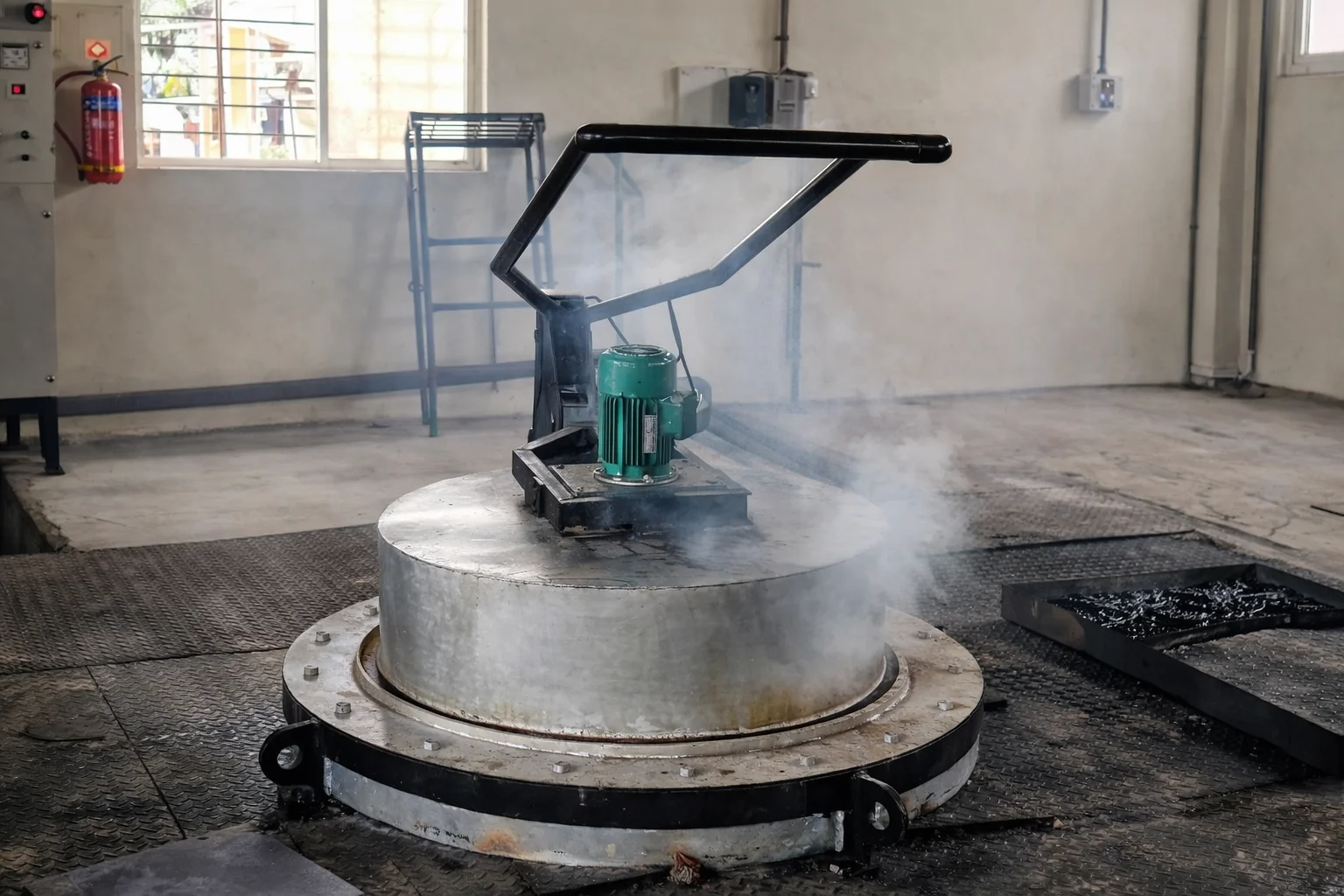
High-Performance Pit Type Tempering Furnace for Vertical Heat Treatment
Robust and precision-engineered Pit Type Tempering Furnace Manufacturer in Pune designed for uniform heating of long and vertical components with consistent metallurgical results.
Trusted Pit Type Tempering Furnace Manufacturer in Pune
If you’re searching for a reliable pit type tempering furnace in Pune, you’re likely dealing with long or heavy components where standard furnaces don’t give proper results and that’s where most systems fail.
Uneven heating in vertical components often leads to:
- Distortion
- Inconsistent hardness
- Material stress
As a trusted pit furnace manufacturer in Pune, we deliver systems that ensure:
- Uniform heating for vertical loads
- Stable temperature control
- Efficient heat circulation
- Long-term industrial reliability
What is a Pit Type Tempering Furnace?
In simple terms—it’s built for depth.
Unlike box furnaces, pit furnaces allow:
- Vertical loading of components
- Better heat circulation around long parts
- Reduced distortion during tempering
Our vertical tempering furnaces in Pune are designed to deliver accurate and consistent heat treatment for demanding industrial applications.
Key Features of Our Pit Type Tempering Furnaces :
That’s exactly what we solve.
Uniform Vertical Heating
Ensures consistent temperature across full component length.
Deep Chamber Design
Ideal for long shafts, rods, and cylindrical components.
Controlled Heating Cycles
Precise control over temperature and timing.
Energy Efficient Insulation
Reduces heat loss and improves efficiency.
Heavy-Duty Construction
Built for continuous industrial use.
Customizable Design
Available in different depths, diameters, and capacities.
Why Choose Raj Enterprises?
Here’s why industries trust us as a leading pit furnace manufacturer in Pune:
Application-Based Engineering
Designed specifically for vertical heat treatment.
Consistent Tempering Results
Uniform heating improves product quality.
Reduced Distortion
Better heat circulation minimizes deformation.
Energy Cost Optimization
Efficient design reduces operational costs.
Pune-Based Manufacturing Advantage
Quick service and faster response.
Trusted Since 2005
Strong experience in industrial furnace manufacturing.
Applications of Pit Type Tempering Furnace :
Our pit type tempering furnaces in Pune are widely used across industries requiring vertical heat treatment.
Common applications include:
Technical Specifications (Customizable) :
Typical configurations include:
Custom-built furnaces available based on your process needs.
Frequently Asked Questions :
What is a pit type tempering furnace used for?
It is used for tempering long or vertical metal components.
What is the advantage of a pit furnace?
It allows uniform heating of long components with reduced distortion
Which industries use pit furnaces?
Automotive, tooling, forging, and engineering industries.
Do you provide customized furnaces?
Yes, we design furnaces based on your application.
Do you provide installation and support?
Yes, we offer complete installation and after-sales service.
Service Areas :
We supply pit type tempering furnaces across:
