

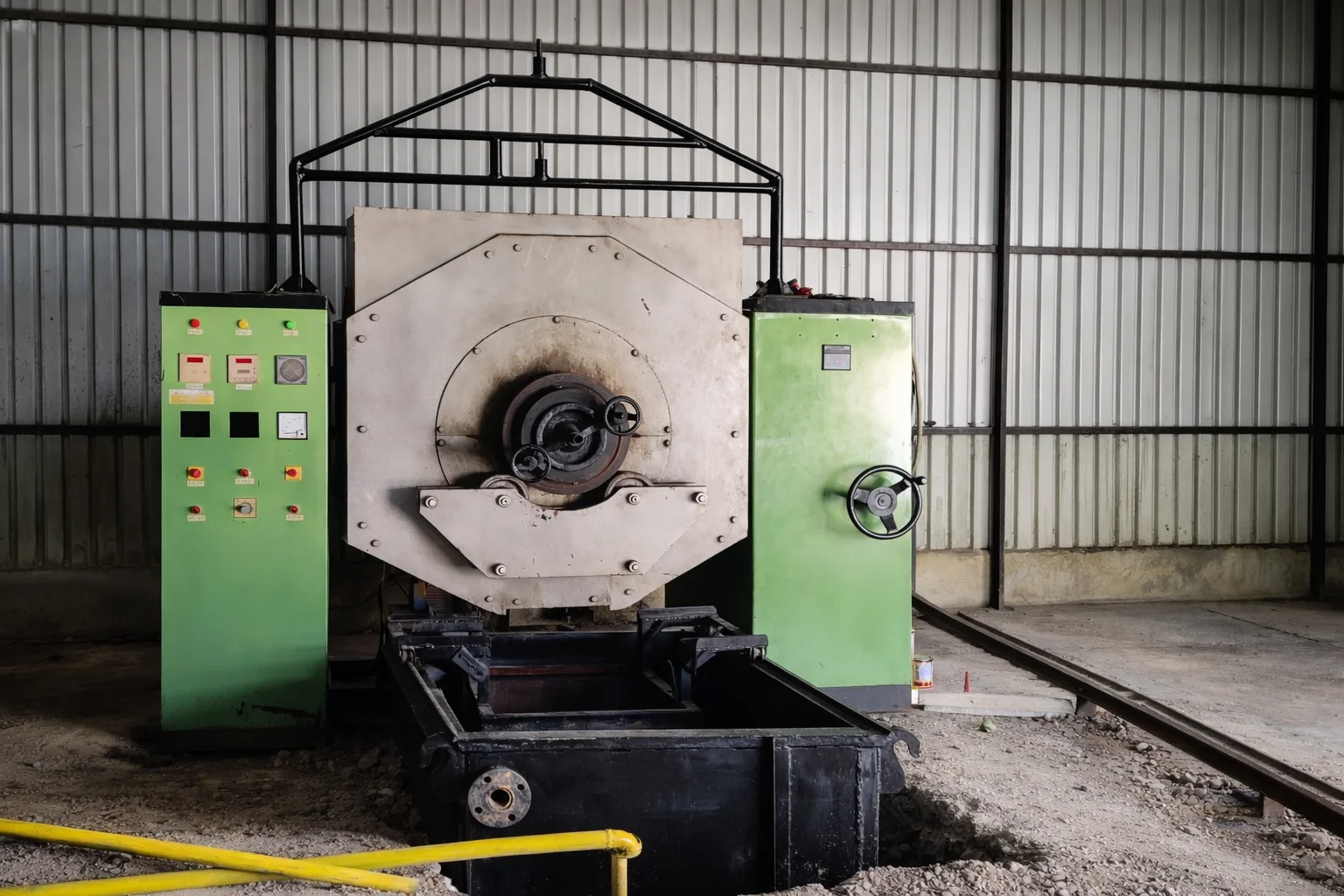
High-Performance Rotary Hearth Furnace for Continuous Heat Treatment
The advanced rotary hearth furnace manufacturer in Pune is designed for continuous processing, uniform heating, and high production efficiency in industrial applications.
Reliable Rotary Hearth Furnace Manufacturer in Pune
At Raj Enterprises, we manufacture rotary hearth furnaces in Pune that are built for uninterrupted operation, uniform heat treatment, and higher throughput.
As a trusted rotary hearth furnace supplier in Pune, our systems are designed to deliver:
- Continuous processing without interruptions
- Uniform heating across all components
- Improved production efficiency
- Reduced handling time
What is a Rotary Hearth Furnace?
In simple terms—it keeps your production moving.
Unlike batch furnaces, where you load and unload in cycles, a rotary system allows:
- Continuous input and output
- Consistent thermal exposure
- Higher productivity
Our continuous furnaces in Pune are engineered for industries where production speed and uniformity go hand in hand.
Key Features of Our Rotary Hearth Furnaces
That’s exactly what our systems are built for.
Continuous Operation Design
Eliminates downtime between batches and increases output.
Uniform Temperature Distribution
Ensures consistent heat treatment across all components.
Rotating Hearth Mechanism
Smooth and controlled movement for even exposure.
Energy Efficient System
Optimized heating zones reduce fuel consumption.
Heavy-Duty Industrial Construction
Built for long-term operation in demanding environments
Why Choose Raj Enterprises?
Here’s why industries trust us as a leading rotary hearth furnace manufacturer in Pune:
Process-Oriented Engineering
Every furnace is designed around your production flow.
Consistent Heat Treatment Results
Uniform heating ensures better product quality
Increased Production Efficiency
Continuous operation improves throughput.
Reduced Operational Costs
Energy-efficient design lowers long-term expenses.
Pune-Based Manufacturing Advantage
Faster service, quick response, and local support.
Applications of Rotary Hearth Furnace
Our rotary hearth furnaces in Pune are widely used in industries requiring continuous processing and consistent heat treatment.
Common applications include:
In many real-world setups, switching to a rotary hearth furnace has significantly improved production speed and consistency.
Technical Specifications (Customizable) :
Typical configurations include:
Frequently Asked Questions :
What is a rotary hearth furnace used for?
It is used for continuous heat treatment of components in industrial production lines.
What is the advantage of a rotary hearth furnace?
It allows continuous processing, improving production efficiency and consistency.
Which industries use rotary hearth furnaces?
Automotive, forging, steel processing, and mass production industries.
Do you provide customized rotary furnaces?
Yes, we design furnaces based on your production and process requirements.
Do you provide installation and support?
Yes, we offer complete installation and after-sales service.
Service Areas :
Let’s Build the Right Continuous Furnace for Your Production
If your current system is slowing down production or creating bottlenecks, it’s time to switch to a furnace built for continuous performance.
